
_Yury Gogotsi
Gogotsi is the Distinguished University and Charles T. and Ruth M. Bach Professor in the College of Engineering and director of the A.J. Drexel Nanomaterials Institute.

_LINGYI BI
Bi is a doctoral student in the College of Engineering.
Inspired by kirigami — an ancient Japanese art of paper cutting related to origami — researchers from Drexel and the University of British Columbia have developed a flexible, lightweight, 3D microwave antenna that can be reconfigured by stretching or compressing its shape.
Their study, published in the high-impact journal Nature Communications, demonstrates a new way to manufacture adaptable antennas using MXene, a highly conductive 2D nanomaterial.
The researchers made the antennas by coating an acetate sheet with MXene ink and then cutting a series of parallel slits into the surface. When pulled or compressed, the structure shifts to form an array of small resonators.
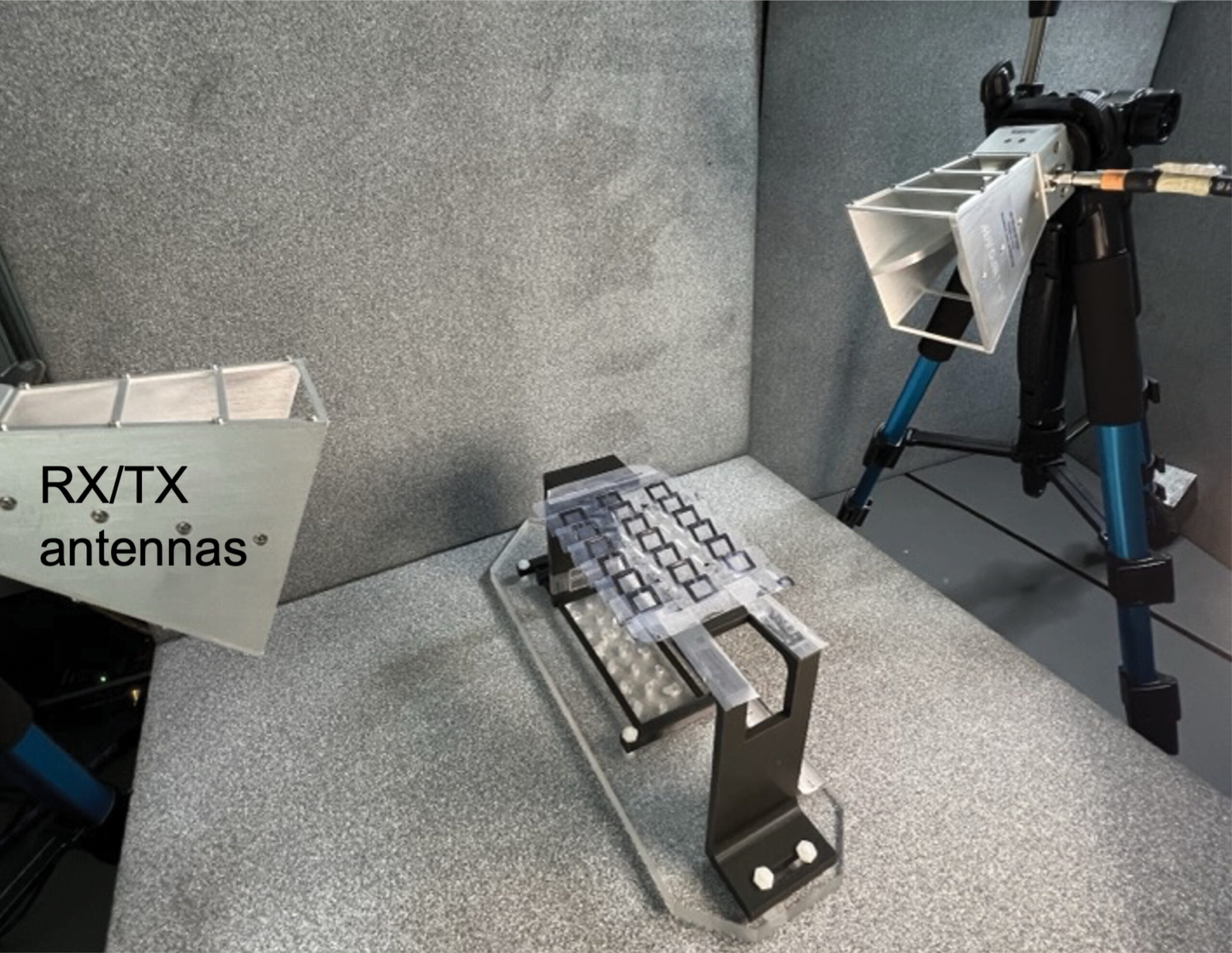
_microwave-absorbing material
In testing, MXene-coated kirigami antennas proved effective at transmitting signals in the commonly used microwave frequency bands of 2-4 GHz, 4-8 GHz and 8-12 GHz.
Unlike conventional antennas that require bulky circuitry for tuning, this design achieves reconfigurability through shape adjustments alone — making it ideal for use in robotics, aerospace and other applications requiring durable, adaptable components.
Their proof of concept represents a new way to quickly and cost-effectively manufacture an ultra-light antenna by simply coating aqueous MXene ink onto a clear elastic polymer substrate material.
“For wireless technology to support advancements in fields like soft robotics and aerospace, antennas need to be designed for tunable performance and with ease of fabrication,” says Yury Gogotsi, Distinguished University and Bach Professor in the College of Engineering, and a co-author of the research. “Kirigami is a natural model for a manufacturing process, due to the simplicity with which complex 3D forms can be created from a single sheet coated with 2D flakes.”
MXenes, first discovered at Drexel in 2011, are 2D materials known for their exceptional electrical conductivity and tunable physical properties. This makes them ideal for wireless communication, where precise control over electromagnetic waves is essential. The kirigami antennas proved effective at transmitting signals across key microwave frequency bands and could also function as strain sensors to monitor structural integrity in buildings and infrastructure.
WATCH: See how the antenna changes frequency as it changes shape.