
_Yury Gogotsi
Gogotsi is the Distinguished University and Charles T. and Ruth M. Bach Professor in the College of Engineering and director of the A.J. Drexel Nanomaterials Institute.
To reduce the weight of critical satellite components, researchers from Drexel and the University of British Columbia are turning to a novel alternative: waveguides made from 3-D printed polymers coated with an ultra-thin layer of conductive nanomaterial.
In a study published in Materials Today with support from the National Science Foundation, the team tested whether a conductive coating made from MXene, a nanomaterial discovered at Drexel, could replace traditional metal waveguides.
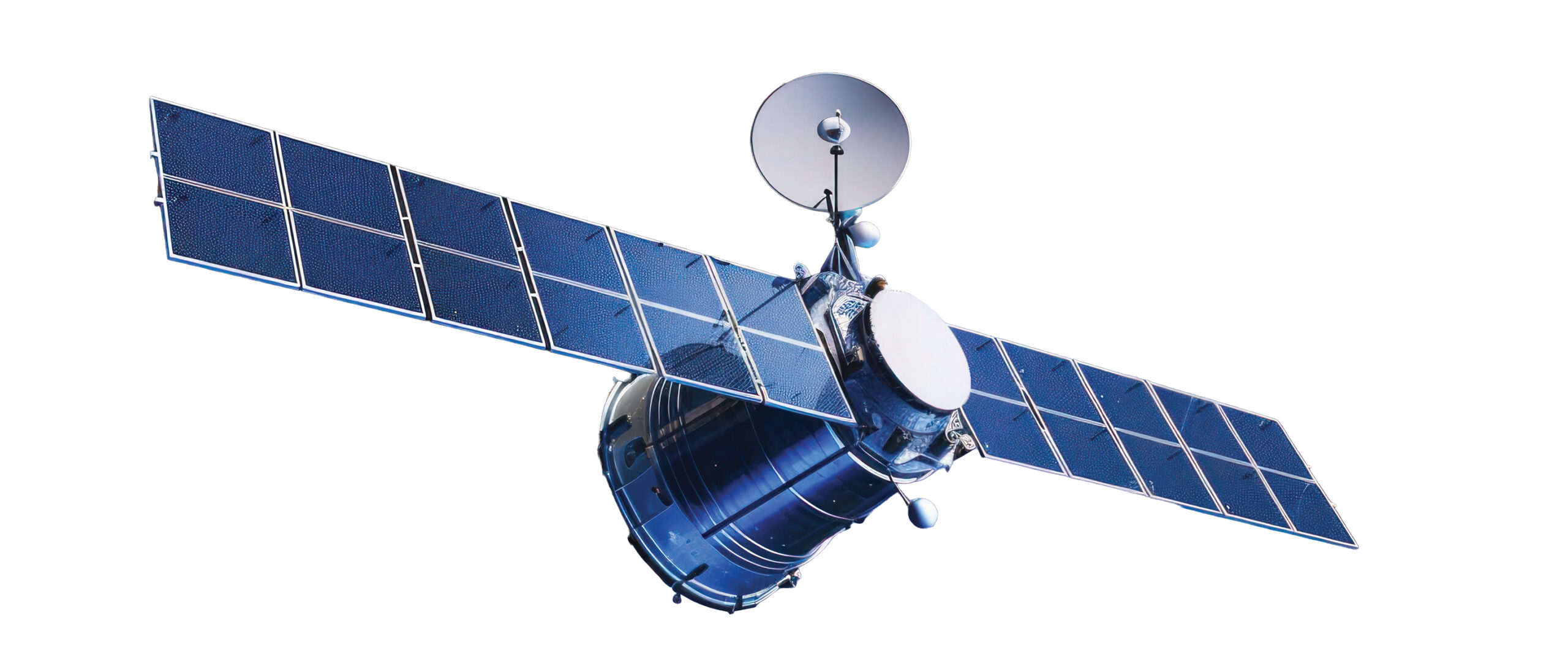
Satellite waveguides — metal tubes that function like pipelines to transfer microwaves to antennas that allow communication between satellites and Earth — add substantial weight to payloads launched into orbit. The cost of taking a kilogram of load to orbit ranges from $1,000 to over $20,000, and lighter alternatives could cut fuel costs and allow rockets to carry more.
“In spaceflight applications, every extra gram of weight counts,” says Yury Gogotsi, Distinguished University and Bach Professor in the College of Engineering who discovered MXenes with Distinguished Professor Michel Barsoum. “MXene materials provide one of the thinnest possible coatings — their flakes have a thickness of a few atoms — that can create a conductive surface.”
Experiments showed that waveguides 3D-printed from nylon and coated with MXene weighed eight times less than aluminum versions.
Despite the dramatic weight reduction, the parts maintained 81% transmission efficiency after just one cycle of coating and up to 95% with optimization — nearly matching aluminum’s performance. The MXene layer also proved highly durable, showing no degradation after three months of testing.
The team sees potential beyond satellites. The coatings can be optimized for transmissions of varying frequencies and applied to a variety of additive-manufactured or injection-molded polymer components used on Earth. In 2024, the family of nanomaterials was listed by International Union of Pure and Applied Chemistry among its Top 10 Emerging Technologies in Chemistry with a “true potential to transform our world.”