
_Marina Potapova
Potapova is an associate professor in the College of Arts & Sciences Department of Biodiversity, Earth and Environmental Science and curator of the Diatom Herbarium in the Academy of Natural Sciences.
In the centuries since Carl Linnaeus published his “Systema Naturae,” taxonomists who name, define and classify biological organisms have become an endangered species.
Dwindling ranks of trained taxonomists pose a challenge for researchers who document biodiversity and maintain inventories used for monitoring environmental conditions and protecting wildlife. The trend is unfolding just as scientists are scrambling to study and record how environmental degradation and climate change affect varied species of plants and animals.
“There are fewer and fewer taxonomists, because there is not much support for that expertise,” explains Marina Potapova, curator of the Diatom Herbarium at the Academy of Natural Sciences of Drexel University and an associate professor in the College of Arts and Sciences.
With that expertise in decline, Potapova and other biologists are supporting ongoing discovery in the field through a technological assist. They’re building a repository of data on diatoms, which are microscopic, algae-like organisms (part of an ancient single-cell kingdom that is neither plant, animal nor true fungus, known as protists) that live in fresh and saltwater. Because they are very particular about the quality of water in which they dwell, diatoms are used by ecologists to monitor changes in aquatic ecosystems that affect water nutrients, suspended sediments, flow rate and elevation.
Potapova and a group of diatom researchers established Diatoms.org, a robust digital platform for recording the diversity of diatom species in North America. The website will serve as a clearinghouse for information about new and previously known diatom species. It received foundational support from the U.S. Environmental Protection Agency, the U.S. Geological Survey and the Institute of Arctic and Alpine Research at the University of Colorado Boulder, which maintains it.
 _PHOTO_GALLERY ENLARGE
1_What are Diatoms?
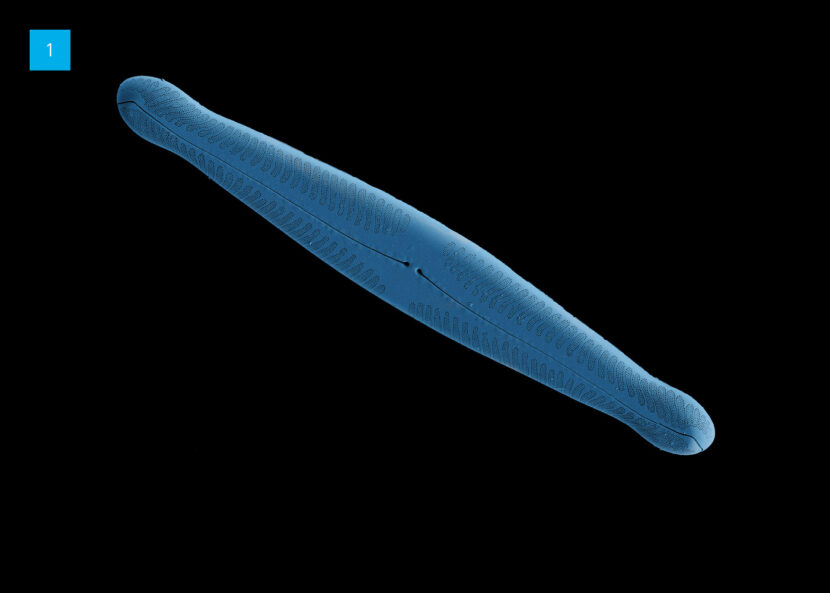
Diatoms are single-celled, algae-like organisms that live in streams, ponds, lakes, oceans and even soils. They use energy from the sun, like plants, and remove carbon dioxide from the atmosphere. They produce up to 30% of the air we breathe.| Pinnularia from Sheeler Lake in Keystone Heights, Florida
2_Why do Diatoms Matter?
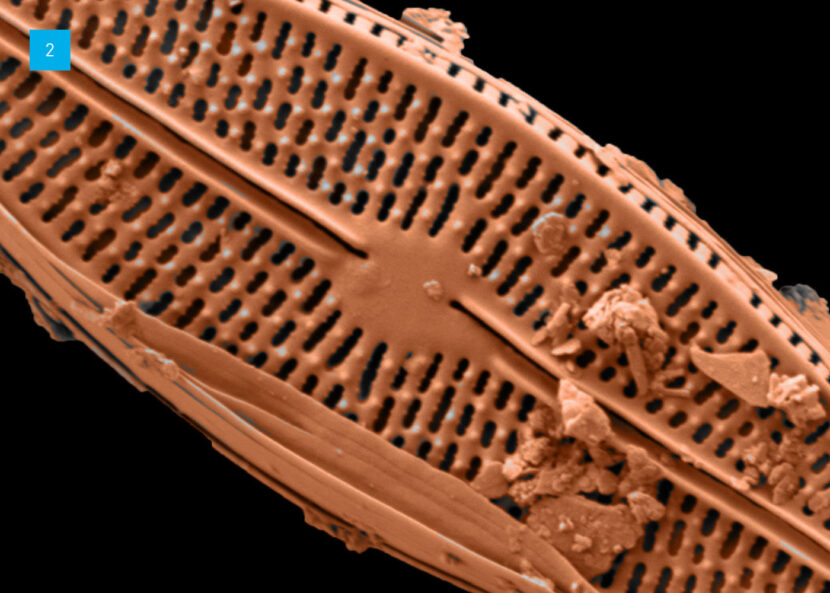
Diatoms produce long-chain fatty acids, creating a feast for the ecosystem of zooplankton, aquatic insects, fish and whales.| Pinnularia from Wrights Pond in Mechanicsville, Virginia
3_Why study Diatoms?
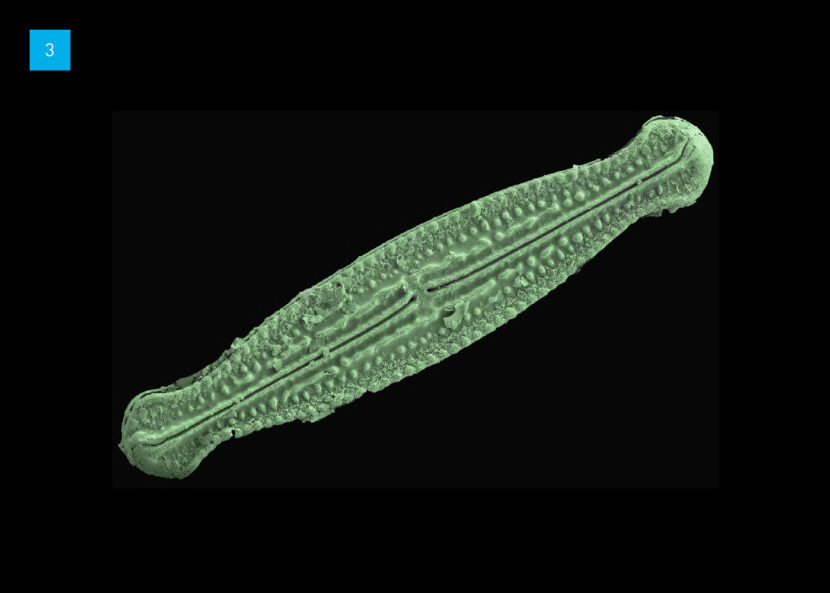
Diatoms provide scientists with insights about the changing health of aquatic systems. Because their silica cell walls do not decompose, diatom remains can be preserved up to tens of millions of years.| Brachysira from Goober Pond in Whiting, New Jersey
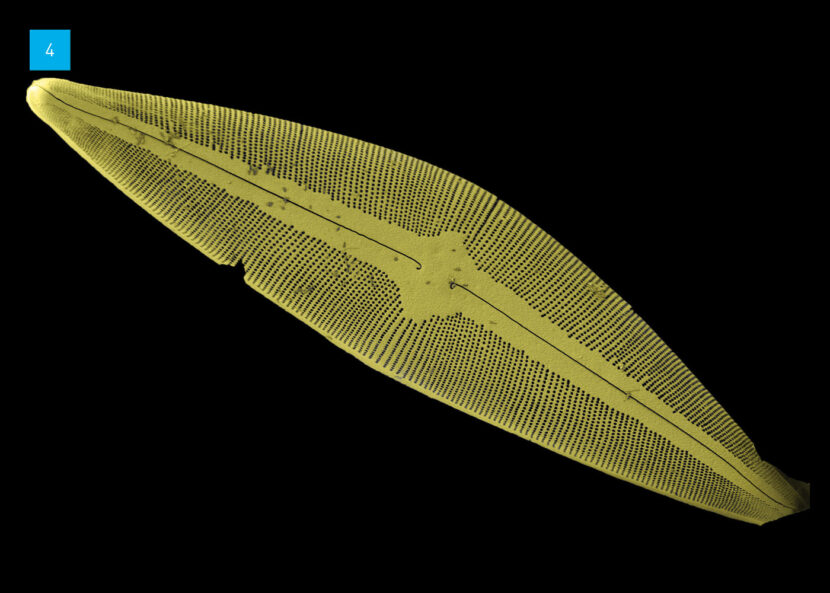
4_database of beauty
The new Diatoms.org database is an opportunity to establish consistent standards for species identification. It also opens a window into the delicate, intricate beauty of this microscopic species. | Cymbopleura from Noyes Pond in Hancock, Maine
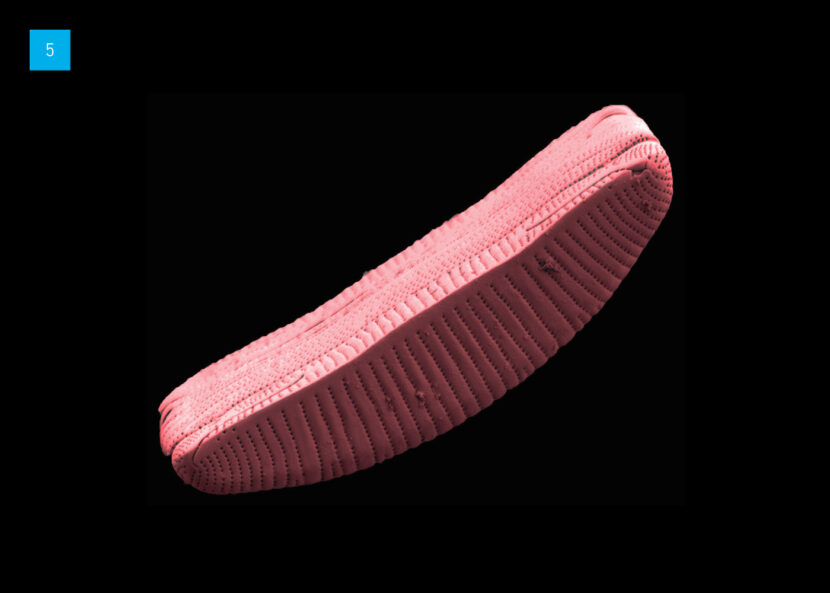
5_
Eunotia from Slab Pond in Medford, New Jersey
The project puts a modern spin on old-school science, largely by advancing a uniform set of standards for describing and recording diatom species — of which anywhere from 20,000 to 2,000,000 may exist — as new varieties are discovered each year.
Applying consistent standards for species identification serves the interests of science, Potapova says, noting that taxonomists have not historically followed uniform conventions. An editorial board on which Potapova serves reviews submissions of new or previously identified species.
“Right now, all this taxonomy is all spread out and balkanized in different books,” Potapova says. “Just a few laboratories around the world have enough resources to buy all these books. What we’re trying to do is also democratize the science.”
While satisfying a need in the scientific community, the website also provides the general public with digestible information, explaining diatoms’ role as an early indicator of waterway health, offering sortable directories of fresh and saltwater species, and featuring images of the tiny see-through silica shells they leave behind that illustrate their ornate beauty.
The website has proven its research value, Potapova says, and has already received “tons” of citations in academic journals.