
_IVAN BARTOLI
Bertoli is a professor and head of the College of Engineering’s Intelligent Infrastructure Alliance.

_FEI LU
Lu is an assistant professor. in the College of Engineering.
A new wireless sensor system developed by researchers in Drexel’s College of Engineering could help federal and local agencies prioritize bridge maintenance and prevent structural failures. The system, powered by solar energy, continuously monitors bridge deformation — detecting early signs of deterioration without requiring costly manual inspections.
“With as much aging infrastructure as there is in the United States, we need a way to keep a close eye on these critical assets 24-7,” says Ivan Bartoli, who co-authored a paper on the system with Assistant Professor Fei Lu and Mustafa Furkan, a post-doctoral researcher, and Yao Wang, a doctoral student. “This is an urgent need…so that we can efficiently and sustainably approach the preservation and improvement of our infrastructure.”
The system combines a wireless displacement sensor, photovoltaic power supply, a deformation measuring device, and a remote monitoring interface. It tracks movement in bridge girders as traffic passes, which can indicate structural weaknesses over time.
_ACCURACY VS. EASE
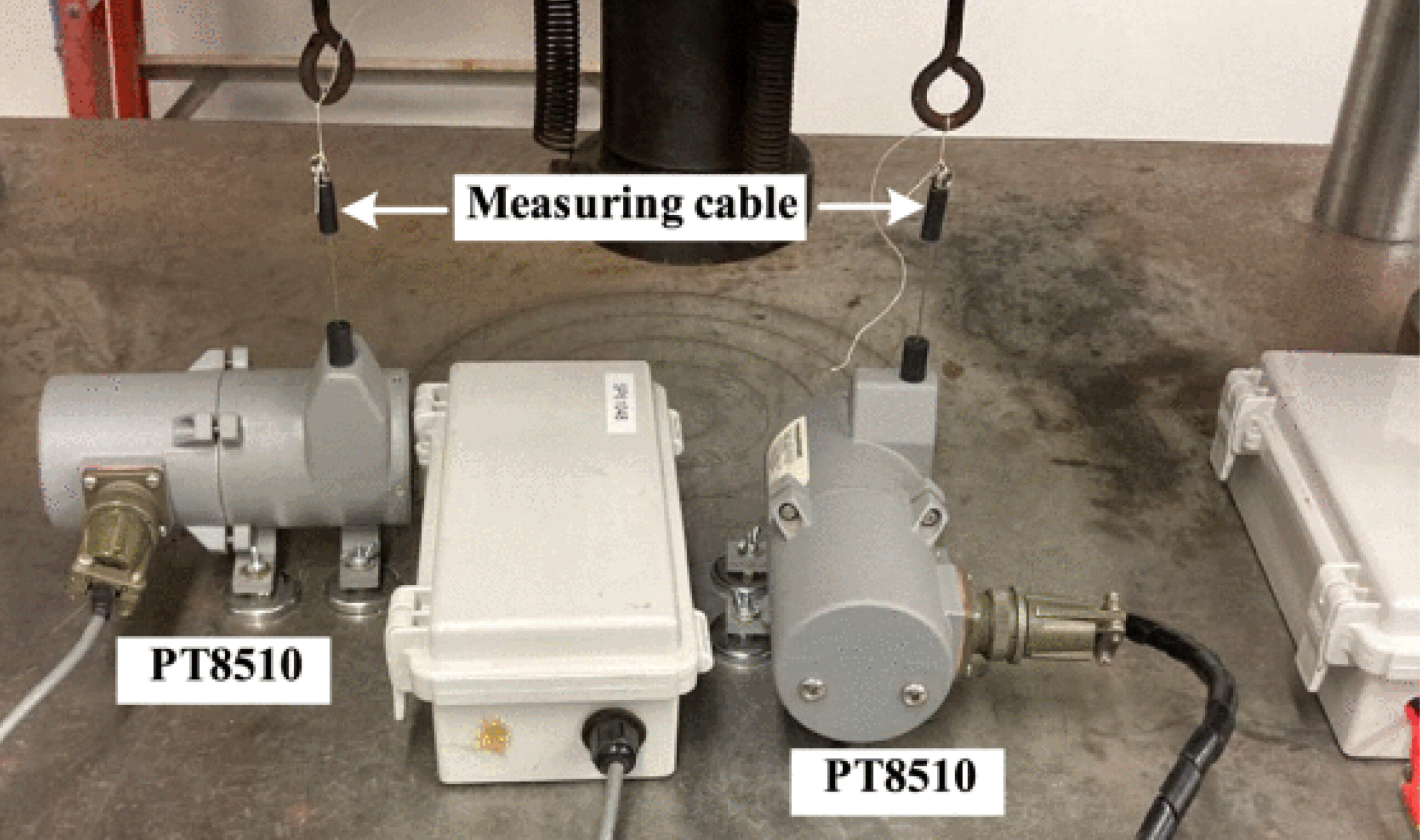
To test the system, engineers set up an experiment using a Tinius-Olsen machine designed to apply precise movements — similar to the way a bridge might shift under the weight of traffic. The system, which measures how much a bridge bends or deforms, was tested in both wired and wireless setups to compare accuracy.
During the test, a mechanical platform steadily moved a sensor up and down in small increments while both systems recorded the displacement. The wired system was slightly more precise, with a measurement error of just 1.8% compared to 2.8% for the wireless version. Despite the small trade-off in accuracy, researchers note that the lack of bulky cables and reliability of the wireless system are key advantages over the wired system.
Unlike traditional wired sensor systems, Drexel’s approach eliminates hundreds or thousands of feet of costly cables and allows multiple sensors — including accelerometers, tiltmeters and strain gauges — to be integrated for a fuller view of bridge health.
Electrical engineers at Drexel optimized the power system to ensure it functions in all weather conditions. The solar-powered battery can sustain the sensors for up to three weeks without sunlight. Tested in both lab and real-world settings, the system is designed for years of uninterrupted operation with little to no maintenance.
The research, funded by the Federal Highway Administration, appeared in the IEEE Journal of Emerging and Selected Topics in Industrial Electronics.