
_Michel Barsoum
Barsoum is a distinguished professor in the College of Engineering.
Though just 32, Greg Schwenk’s passion for chemistry has taken him a great distance in life. What began as a spark of interest in high school in the rural town of Elmhurst, near Scranton, Pennsylvania, took deeper root during his undergraduate years at the University of Scranton and flowered as a doctoral student at Drexel. There, with a little risk taking and the right mentors, Schwenk (PhD inorganic chemistry ’22) turned his academic pursuits into a startup that has the potential to transform industries and tackle big environmental challenges.
While studying inorganic chemistry at Drexel, Schwenk found himself surrounded by opportunity. He became a postdoctoral researcher in the College of Engineering lab of Professor Michel Barsoum — a leading researcher in nanomaterials — just as Barsoum was exploring a potentially groundbreaking new one-dimensional nonfilament material he had discovered in 2021 with Hussein O. Badr ’23 (then a doctoral student, now a post-doc at Stanford University).
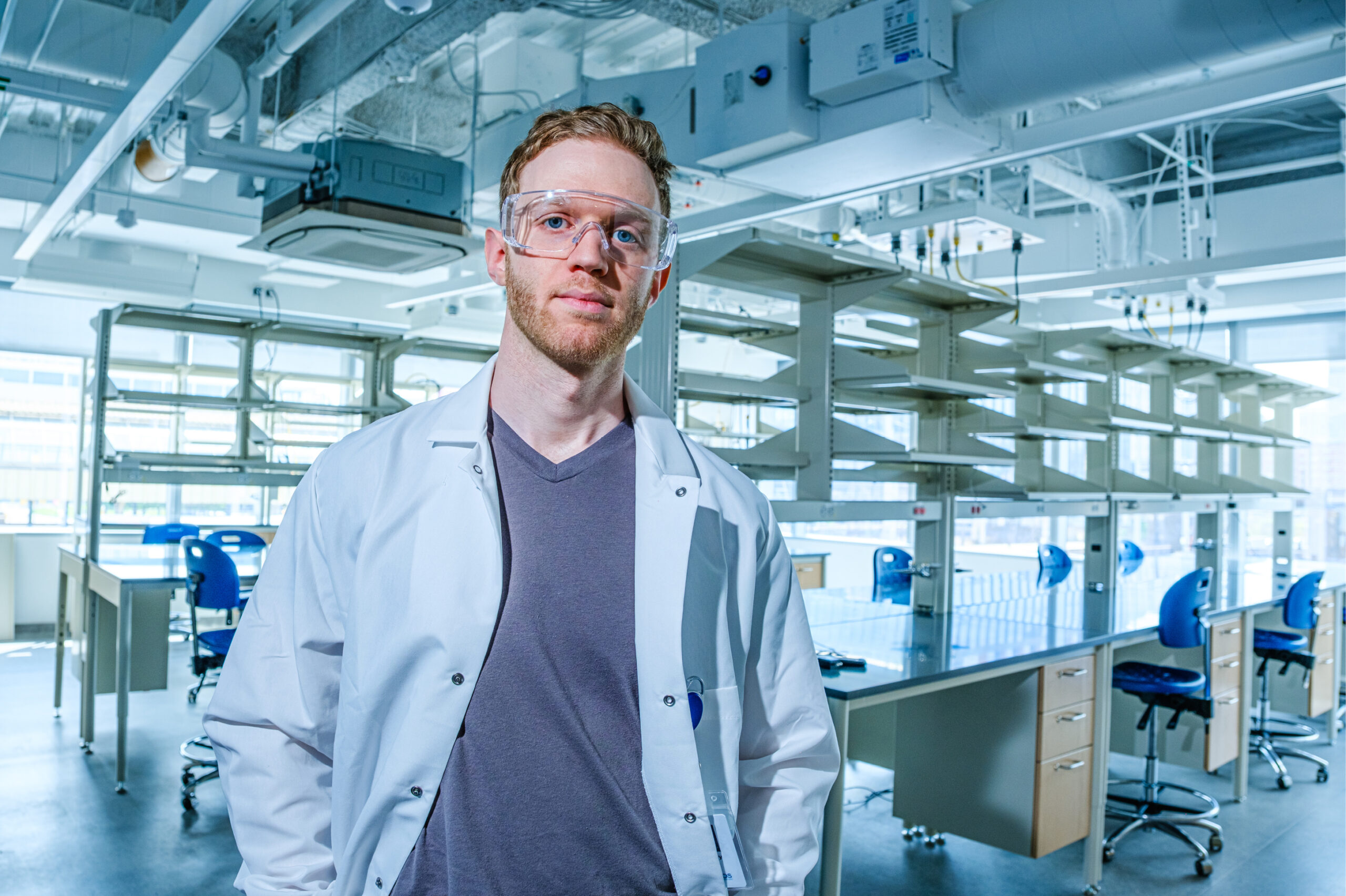
Jump forward to this year, when Schwenk and Barsoum announced they would co-found One-D Nano, a startup focused on commercializing the material, with Schwenk as CEO and Barsoum as technical advisor.
“It wasn’t always sunshine and rainbows, and there were challenges along the way, but many of the teachers I had shaped my analytical mindset and love for discovering new things,” Schwenk says of his journey from student to CEO. “I consider myself incredibly lucky to have had amazing academic role models and early experiences that laid the foundation for where I am today.”
Chemistry, for Schwenk, represents an opportunity to improve lives, and his goals are already earning him recognition. In July 2024, he was awarded a prestigious Activate Fellowship, becoming one of only 62 fellows selected from more than 1,000 applicants. This fellowship supports scientists who are on a mission to turn breakthroughs into high-impact businesses.
The Activate Fellowship offers Schwenk over $500,000 in non-dilutive funding — support that doesn’t require giving up any ownership in the company — to cover his salary, research expenses, health benefits and travel. Additionally, the fellowship provides access to a network of educational resources and support from a community of scientists, engineers, investors and fellow scientist-entrepreneurs.
Courses and Connections
Schwenk’s involvement with the groundbreaking 1D nanomaterial was serendipitous. In 2021, while working in the University’s Materials Characterization Core lab, he met Badr and struck up a conversation about the new nanomaterial Badr was developing with Barsoum. Intrigued, Schwenk cold-emailed Barsoum, expressing interest in working in his lab. The outreach worked.
By September 2022, Schwenk had defended his thesis and, just two days later, began working with Barsoum’s Layered Solids Group on what he describes as a “paradigm-changing” material.
“The research process was intense but rewarding,” Schwenk says. “We knew we were onto something special, and the support from the research community at Drexel was invaluable. Our work speaks volumes about the collaborative and supportive research culture at Drexel.”
“Our work speaks volumes about the collaborative and supportive research culture at Drexel.”
Barsoum, already known for his earlier discovery, with Distinguished University and Charles T. and Ruth M. Bach Professor Yury Gogotsi, of MXenes — a family of two-dimensional nanomaterials made from titanium and carbon atoms — describes the 1D nanofilament material as “something even more fascinating.” The 1D nanostructures, which he likens to ultra-thin spaghetti, are an inorganic cellulose that offers unique properties with promising industrial applications.
“It’s six angstroms by six angstroms — very thin spaghetti; world-record thin,” he says. “It’s the first inorganic material of this kind ever made. If you take a gram of this and connect it end to end in a chain, it will span 400 million miles.”
With a very high surface area and structural qualities similar to biological materials, the 1D nano material has remarkable properties “we have never seen before,” Barsoum says. He imagines the material being used to address major environmental and industrial challenges. For example, it can absorb harmful dyes from textile waste and, using sunlight alone, degrade them into less harmful byproducts. Green hydrogen production is another focus, tapping into the material’s potential to produce sustainable energy.
Programs and Partners
The commercialization path for these 1D nanostructures is complex, given their diverse potential applications. Finding a focus has been both exciting and challenging for Schwenk and One-D Nano. To help shape their strategy, Schwenk participated in the NSF I-Corps Program, a government program that Drexel participates in to help scientists assess the commercial potential of their inventions.
“Startup companies have limited resources, and determining what problem to solve first is so critical,” Schwenk says. “Without a well-articulated focus that is validated with potential customers and industry stakeholders, you will find no investment. That is when I looked to Drexel Applied Innovation for help. Through working with them, my streak of powerful mentors continued.”
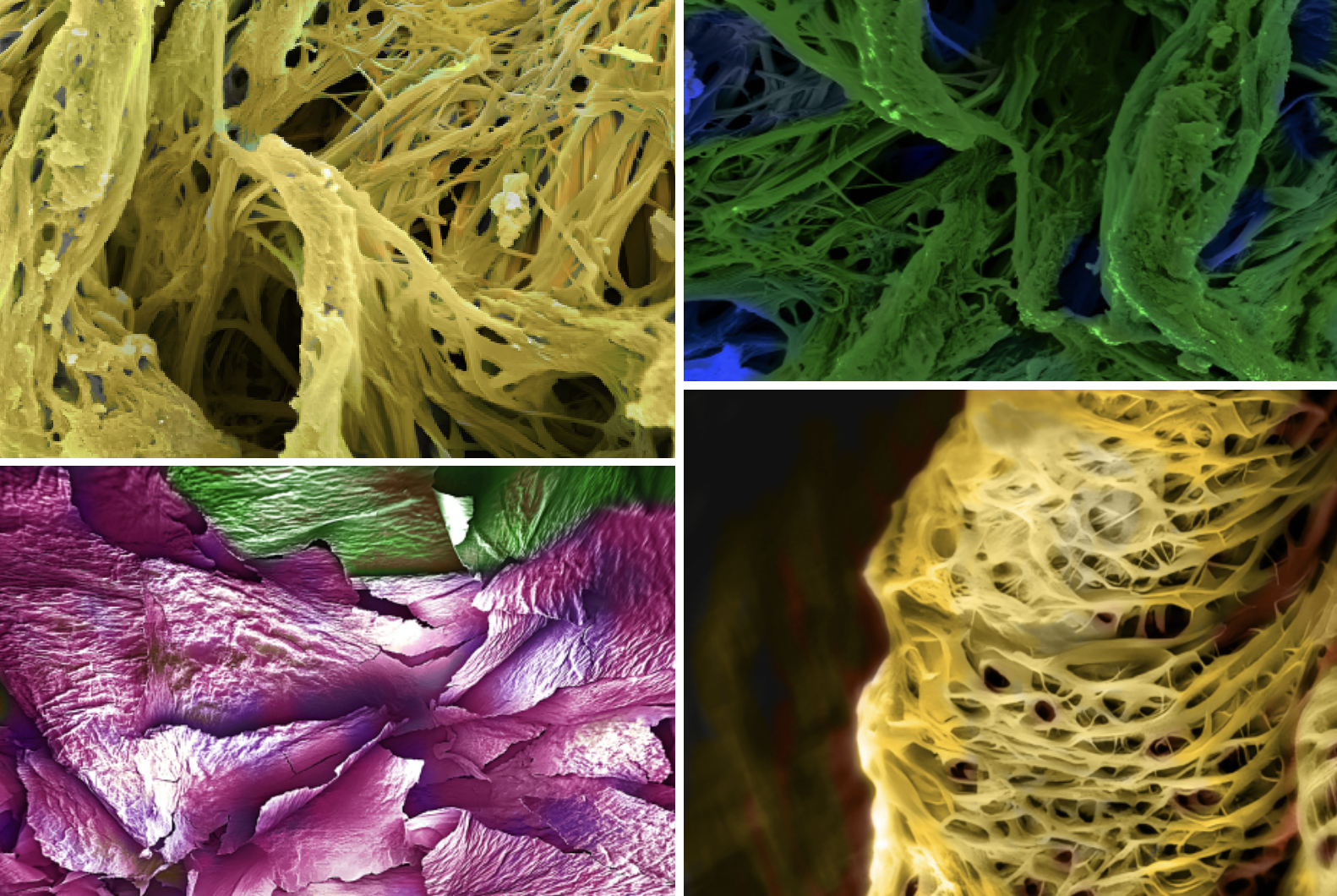
_TINY BUT MIGHTY Scanning electron microscopy (SEM) images of the world’s thinnest 1D nanofilament — just six angstroms wide. This inorganic cellulose, likened to ultra-thin spaghetti, boasts an unprecedented surface area and unique structural properties with potential applications in environmental cleanup and green hydrogen production.
Over the course of six months, Schwenk worked closely with Shintaro Kaido, then-head of Drexel Applied Innovation, which oversees tech transfer for the University. This office partners with University faculty, professional staff, students and external innovators to connect academic inventions to real-world applications. By guiding discoveries into the marketplace, Drexel Applied Innovation seeks to create new products and services that address societal needs.
After he went through the I-Corps program, Schwenk was introduced to the Activate Fellowship as one way to advance One-D Nano’s mission and pursue his desire to be a “scientist-entrepreneur.”
Funds and Support
Programs like Activate and NSF I-Corps have been important in the United States for fostering the scientist-entrepreneur model and ensuring that valuable academic discoveries become available to the world. The increased support of scientist-led startups by top venture capital firms and federal programs marks a shift in the landscape. The model enables more Drexel faculty, post-docs and students to pursue high-growth entrepreneurial pathways while advancing research that impacts society.
Since 2015, Activate has worked to support scientists at research institutions as they pursue entrepreneurship. So far, it has guided 249 fellows and 196 startups across energy, electronics, manufacturing and more. Collectively, Activate Fellows have raised $2.3 billion in additional funding to fuel their work.
“Greg is a great example of the scientist-entrepreneur Drexel can and wants to cultivate,” says Kaido, who mentored Schwenk while he was at Drexel. “Drexel wants to grow the pipeline of scientist-entrepreneurs and help more researchers make commercial and societal impact.”