
_Diana Robins
Robins is a professor in and director of the A.J. Drexel Autism Institute.

_GIACOMO VIVANTI
Vivanti is an associate professor in the A.J. Drexel Autism Institute.
For children with autism, early diagnosis can make a lifelong difference — but how early depends on how doctors screen for it. Researchers from the A.J. Drexel Autism Institute found that using a standardized autism screening tool during routine pediatric visits helps identify more autistic children at a younger age, including those with subtle symptoms.
Published in The Journal of the American Academy of Child & Adolescent Psychiatry, the study compared the effectiveness of standardized autism screening using the Modified Checklist for Autism in Toddlers, Revised, with Follow-Up (M-CHAT-R/F) to usual care, which relies on unstandardized screenings or clinical judgment for referrals.
Thirty-one pediatric practices were randomly assigned to use either the M-CHAT-R/F screener or usual care during 18-month well-child visits. Toddlers flagged for autism likelihood were referred to the research team for diagnostic evaluation.
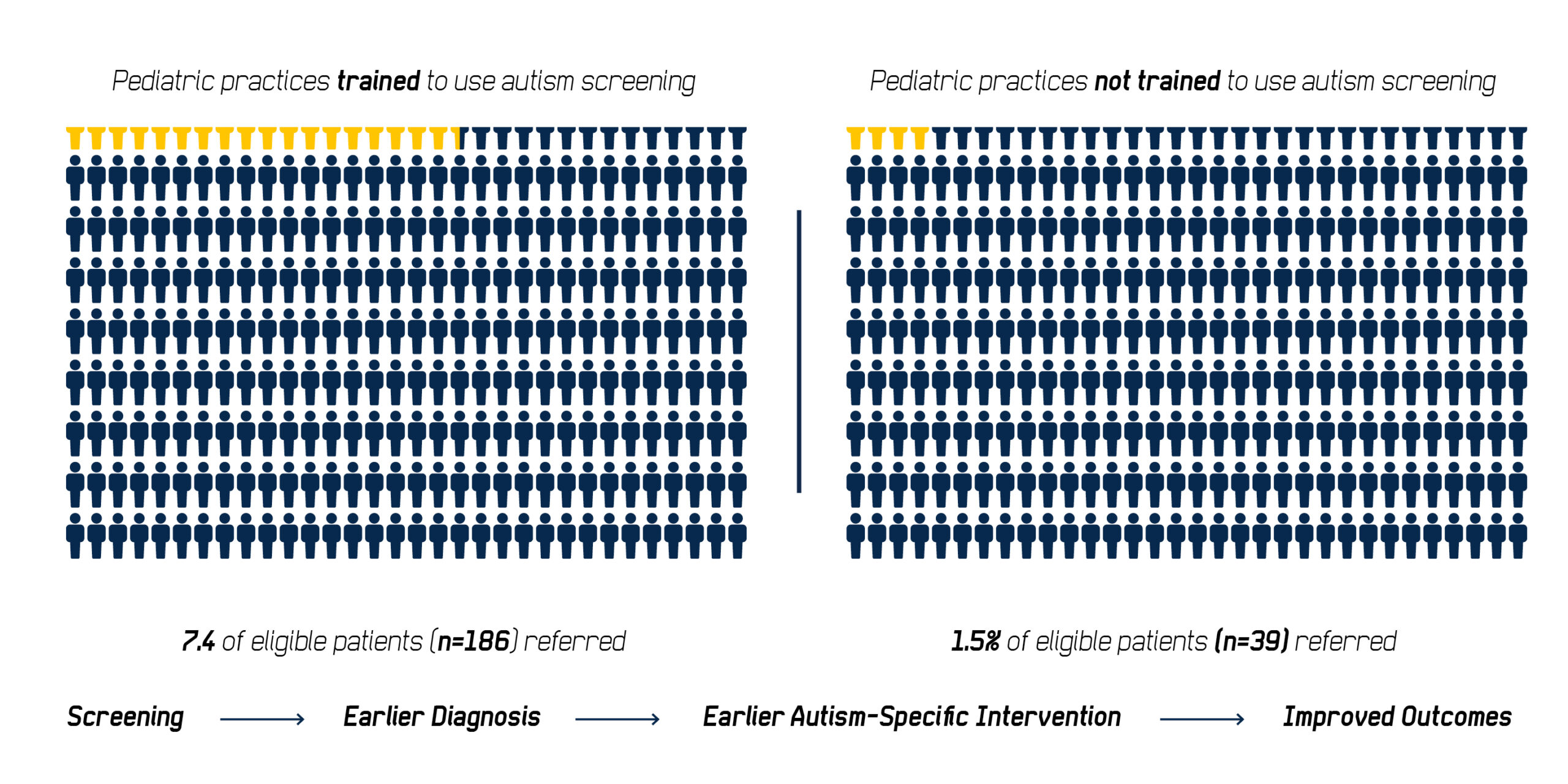
_Autism referrals
Pediatric practices using standardized autism screenings referred 147 more children for evaluation, leading to earlier and more accurate diagnoses.
The difference was striking. In practices using standardized screening, 186 children were referred for a diagnostic evaluation at an average age of 20.6 months. In contrast, only 39 children were referred in the usual care group, with a later referral age of 23.6 months. Most of the referred children in both groups were later diagnosed with autism, according to lead author Giacomo Vivanti, an associate professor in the A.J. Drexel Autism Institute. The children identified through standardized screening also had a wider range of clinical presentations, including milder delays in areas like language and cognition.
“The earlier identification of autism allows for autism-specific early intervention at a younger age, which improves outcomes across the rest of their lives,” says principal investigator Diana Robins, director of the Autism Institute and creator of the M-CHAT-R/F.
The authors hope that studies like this influence both policy and practice to give all autistic children the opportunity to get needed supports and services early in their lives.