
_Brandy-Joe Milliron
Milliron is an associate professor in the College of Nursing and Health Professions.

_ANN C. KLASSEN
Klassen is a professor in the Dana and David Dornsife School of Public Health
Eating well during gastrointestinal (GI) cancer treatment is easier said than done. Side effects like fatigue, nausea and loss of appetite can make proper nutrition a struggle — not just for patients but also for their caregivers, who often provide meal support while juggling their own physical and emotional stress.
A study published in Cancer Control from researchers in the College of Nursing and Health Professions (CNHP) and the Dana and David Dornsife School of Public Health explored the dietary challenges and support systems available to GI cancer patients and their caregivers.
Findings indicate that caregivers often feel underprepared for the role, lacking confidence in managing treatment side effects and unsure how to help patients eat healthily. They often neglect their own emotional and physical needs.
“In addition to barriers, we also found areas that supported healthy eating for both patients and their caregivers, including a heightened awareness and appreciation for nutrition, the influence of key support people and positive coping strategies,” says lead author Brandy-Joe Milliron, an associate professor from CNHP.
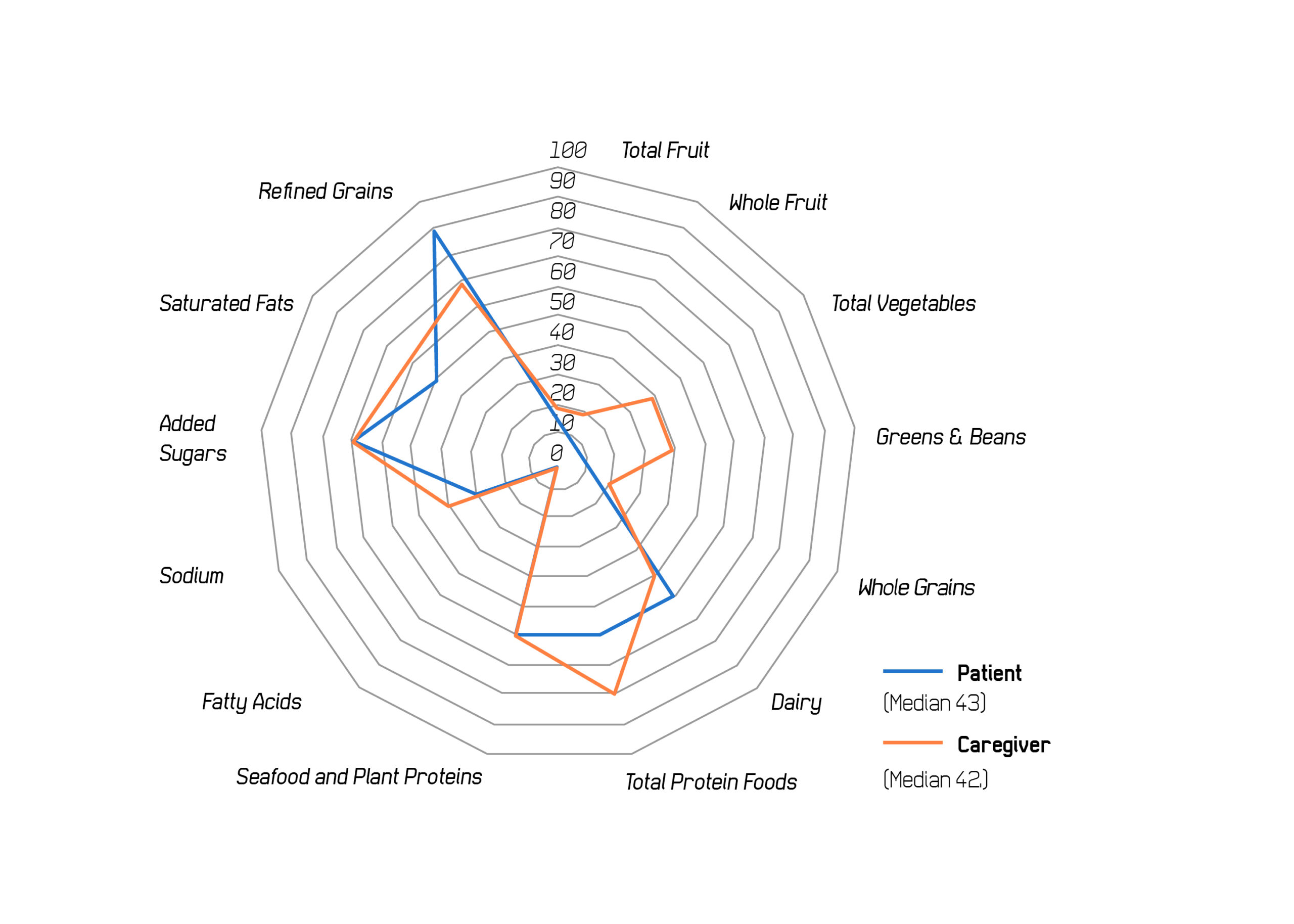
_Menu Map
This radar plot shows how closely patients and caregivers followed recommended dietary guidelines. Each point represents a different food group, with scores closer to the outer edge indicating better alignment with the guidelines. On average, patients scored 43 out of 100, and caregivers scored 42, suggesting room for improvement in overall diet quality.
Twenty-seven patient–caregiver pairs undergoing outpatient chemotherapy completed surveys, dietary assessments and interviews to assess caregiver preparedness, symptom management and barriers to maintaining a healthy diet.
Dietary quality showed room for improvement, with healthy eating scores of 43 out of 100 for patients and 42 for caregivers.
Understanding their experiences and habits can help health care professionals support caregivers in improving nutrition to ease treatment side effects — benefiting both patients and caregivers by reducing distress and improving overall health.
Prior research, including the researchers’ own, confirms that patients with cancer and their families often search for meaningful actions they can take to regain control of some aspects of their lives during this challenging time, adds Dornsife School of Public Health Professor and senior co-author Ann C. Klassen. Tailored nutrition counselling during cancer treatment can offer caregivers psycho-social support, knowledge and problem-solving skills.