
_Raj Suri
Suri is senior vice provost for academic industry partnerships.

_Cuneyt Gozu
Gozu is an associate clinical professor of organizational behavior in the Bennett S. LeBow College of Business.
In parts of rural India, something as basic as clean drinking water can shape a person’s entire future. A partnership between Drexel, FMC Corp. and the nonprofit Community Pure Water is helping by bringing safe water to 56 villages across six states, and showing how universities and companies can team up to make a lasting impact.
“Access to safe, affordable and reliable water, sanitation and hygiene is essential to improving living standards in rural communities,” says Ravi Annavarapu, president of FMC India, an arm of the global agricultural sciences company based in Philadelphia. “When farming families and villages are healthier, all aspects of life begin to improve.”
The University orchestrated a collaboration between FMC-India, which provided water purification devices, and Community Pure Water, which installed them. Faculty gauged villagers’ reactions and fine-tuned the rollout.
Over three years, FMC India provided $1 million to establish reverse-osmosis water purification centers, which were installed by Community Pure Water, a nonprofit that provides drinking water in rural Indian communities. The University orchestrated the academic–industry collaboration, shaping the success of the initiative with a sustainable funding model and research and assessment to ensure meaningful results.
To measure the project’s impact, an interdisciplinary team of Drexel researchers assessed both the health benefits of the water purification centers and community perceptions of FMC’s corporate responsibility efforts. Experts from the Academy of Natural Sciences of Drexel University, Dana and David Dornsife School of Public Health, Bennett S. LeBow College of Business, and the School of Education conducted pre- and post-installation evaluations over three years. Their findings showed measurable progress in expanding access to safe drinking water and increasing recognition of FMC’s leadership in the effort.
“The success of this demonstrates that we can confidently use the operational model we established here with other partners in the future,” says Raj Suri, senior vice provost for academic industry partners at Drexel.
The research suggested some improvements, such as finetuning messaging, optimizing training of FMC’s field personnel, and enhancing water plant operations — leading to a replicable model for future industry–university partnerships that tackle
global challenges.
 _PHOTO_GALLERY ENLARGE
_1 containment
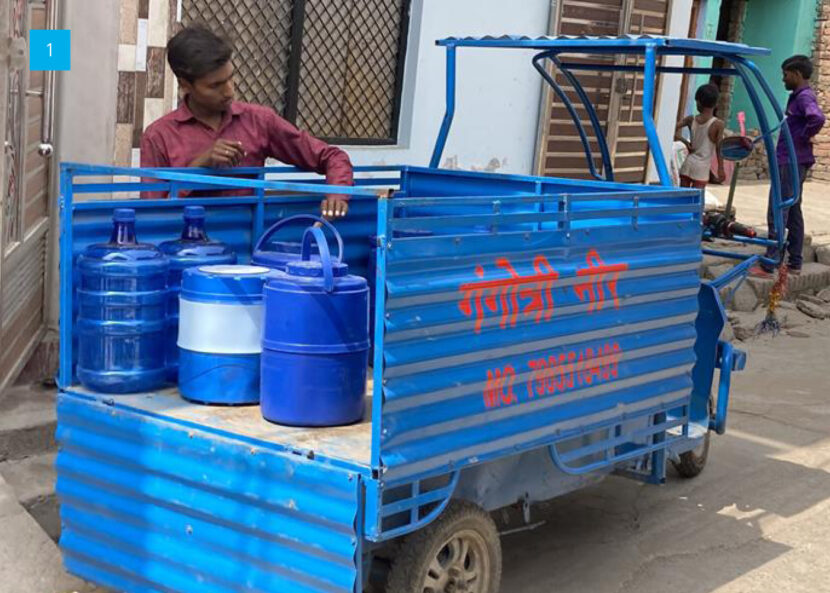
Several full water containers ready to be delivered throughout the village.
_2 purification
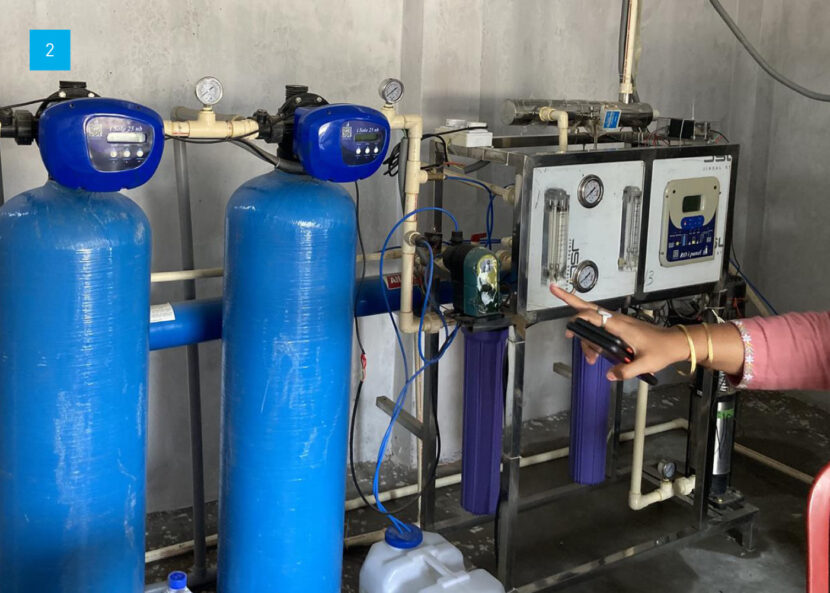
The mechanical system that purified water, making it accessible and potable for residents of the village.
_3 Education
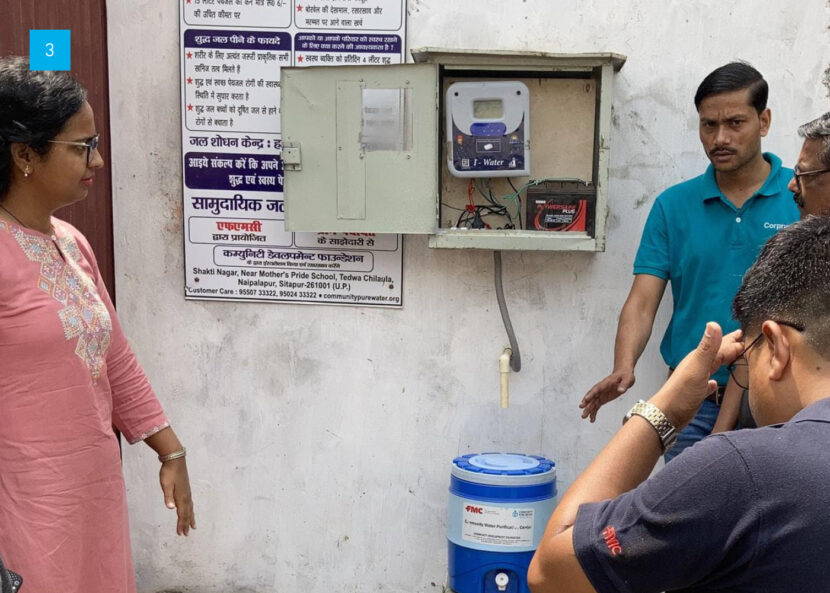
Volunteers and villagers discuss how the system works.
_4 Collection
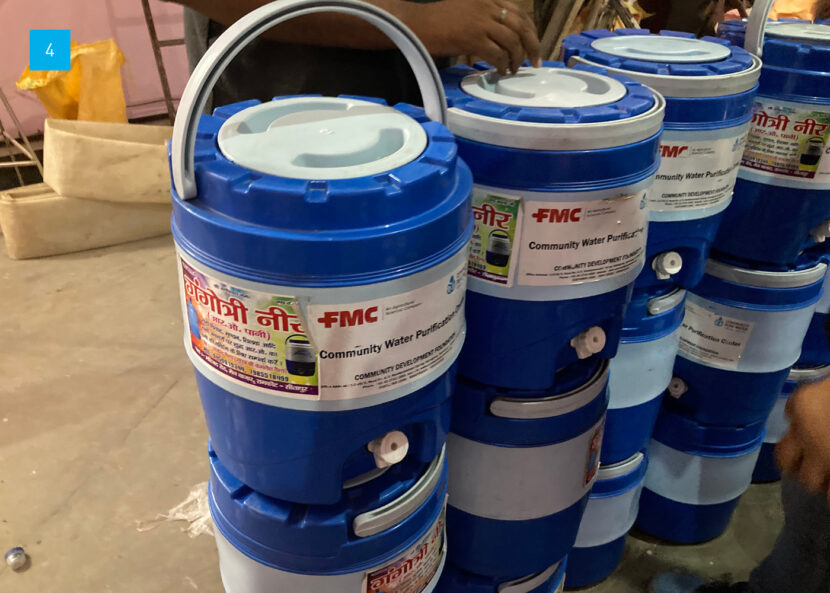
Containers used to collect and deliver water from water centers.
A data dashboard, created through the partnership, will allow FMC to track the water plants and refine future efforts.
LeBow researchers found that while perceptions of FMC’s corporate social responsibility were positive, the messaging needed refinement to drive greater adoption.
“It was important to bring in the leaders of these villages from the beginning,” says Cuneyt Gozu, associate clinical professor of organizational behavior at LeBow. “Many villagers can’t read, so the pamphlets and fliers that were created were of little use; however, they trust village leaders. Once we changed the approach and channel, the data got better.”
With stronger outreach and increased trust, more villagers turned to the treated water supply over time, reinforcing the initiative’s long-term benefits.