
_RACHEL WENRICK
Wenrick is the executive director of arts and civic innovation and founding director of Drexel’s Writers Room.

_AYANA ALLEN HANDY
Allen-Handy is a professor and department chair in the School of Education and director of the Justice-oriented Youth (JoY) Education Lab in the School of Education.
At Drexel’s West Philadelphia campus, research is happening among the rowhomes. It’s unfolding in living rooms, at block parties and stitched into community quilts — all part of an arts-centered data collection project co-led by scholars and residents.
The participants are exploring intergenerational co-housing as a strategy to support aging in place, housing affordability and community cohesion. With backing from a $1 million National Science Foundation (NSF) Civic Innovation Challenge grant, Drexel faculty enlisted neighborhood elders as co-investigators — breaking down barriers to science and demystifying how it’s made.
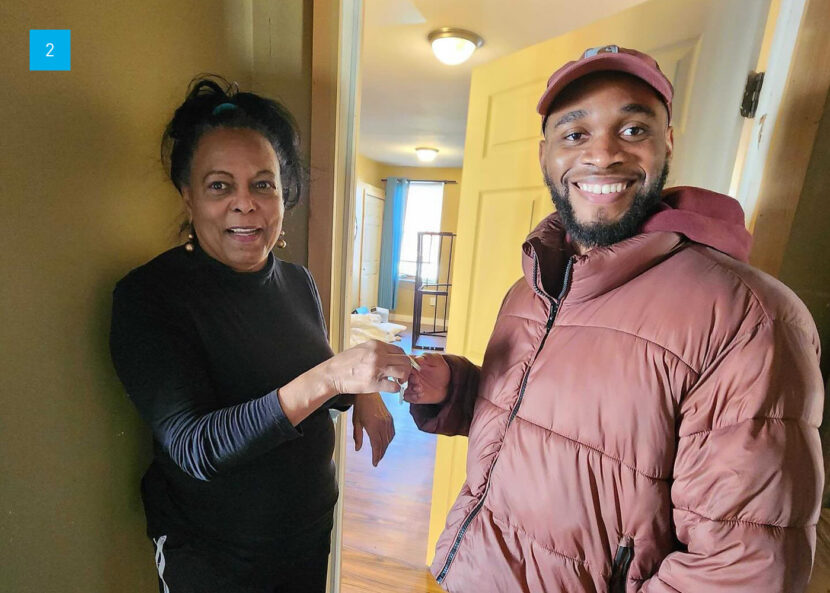
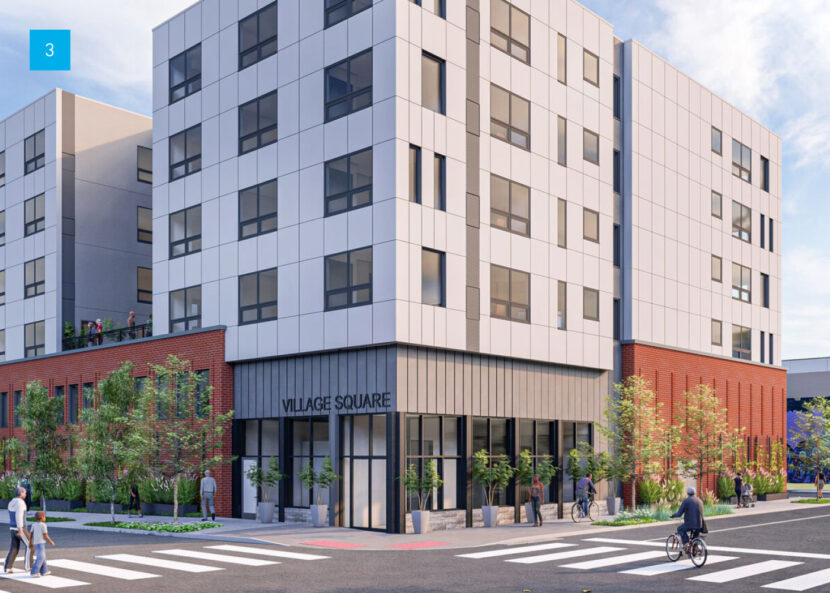
A pilot homeshare is already under way in Mantua, a historically Black neighborhood just north of Drexel’s campus, where Drexel alumnus and Liberty Scholar Ibrahim Kamara and longtime Belmont resident Dianne Wadley have agreed to live together, sharing expenses, upkeep and company. Ultimately, the project will include 18 new duplexes by Lomax Real Estate Partners, creating affordable homeownership opportunities for local families.
Creative Co-Living: The Model
_1 Build Intentional Communities: Create collaborative spaces and creative community programming to bring students and local residents together.
_2 Support Housing Stability: Connect tenants with older homeowners in homesharing arrangements that subsidize costs for both, with support from partners to repair and retrofit homes for aging in place.
_3 Grow Community Ownership: Engage developers to design new intergenerational housing that supports homeownership and long-term neighborhood cohesion.
The heart of the research is 50 firsthand interviews, collected and coded by community researchers who are local elders, and analyzed collaboratively with Drexel researchers. Their goal is to assess community acceptance of homesharing.
“There’s a wide range of perspectives about the potential for this,” says Damaris Dunn, a postdoc working in Drexel’s Justice-oriented Youth Education Lab (JoY Lab) who has a PhD in educational theory and practice from the University of Georgia. “The elders see the value of intergenerational relationships because they’re interacting with postdocs, undergraduate students and graduate students on a regular basis. They also live intergenerationally, so they deeply understand the value.”
The project could be a national model for how campus communities co-exist with homeowners in adjacent neighborhoods. The team is developing a toolkit for community-driven research to serve other campus neighborhoods. They’ve presented their work at conferences and academic venues, sharing both their process and outcomes.
A distinctive element of their work is the use of art — poetry, storytelling, dance and quilting — as a research tool. “We think about quilting as a methodology,” Dunn explains. “How do we weave all of these stories together?”
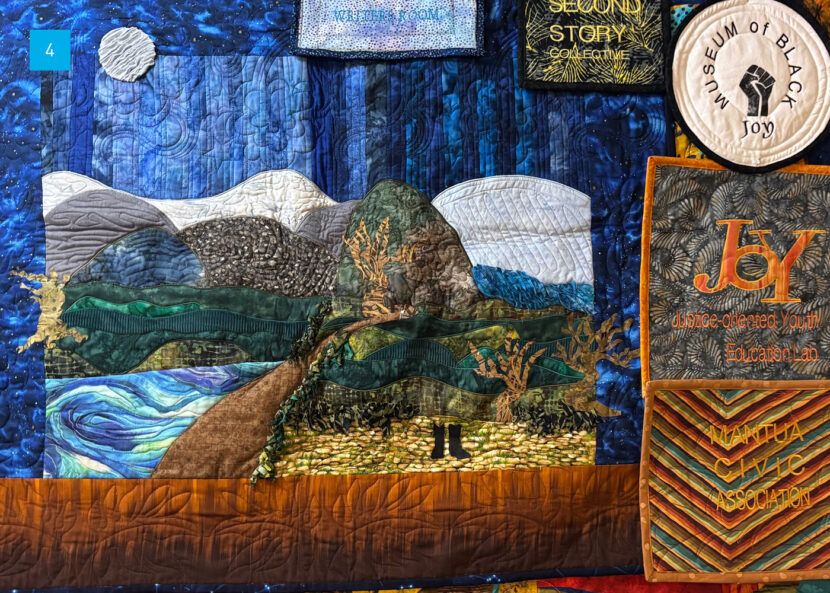
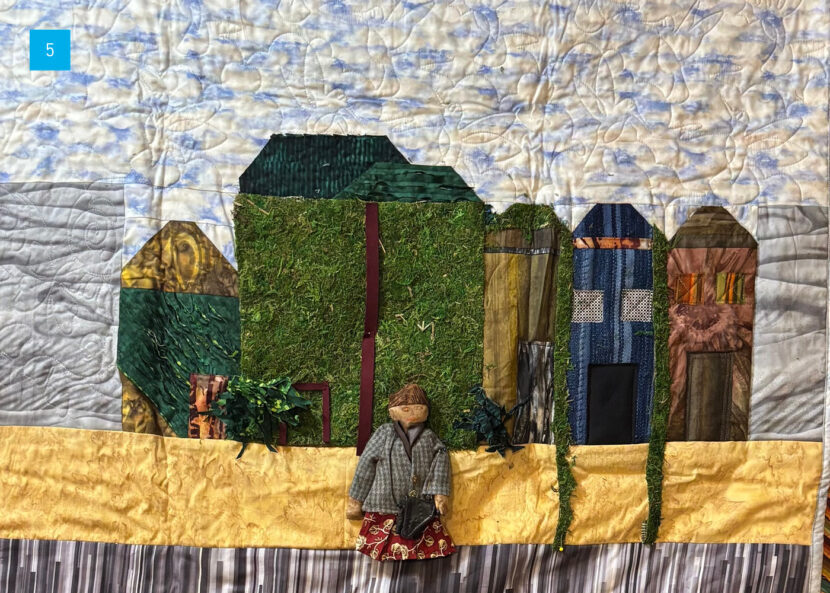
To bring that idea to life, the team enlisted professional quilter Sharon Tindall to create a wall-sized piece reflecting the project’s themes, with individual squares contributed by community members.
“Again, using art to tell our stories,” says School of Education Professor and Department Chair Ayana Allen-Handy, who is principal investigator on the NSF grant with Chris Wright, associate professor in Drexel’s School of Education. “This story of intergenerational cohabitation — even if not all of us are co-housing in the same house, we’re still curating a community across our differences.”
 _PHOTO_GALLERY ENLARGE
_1
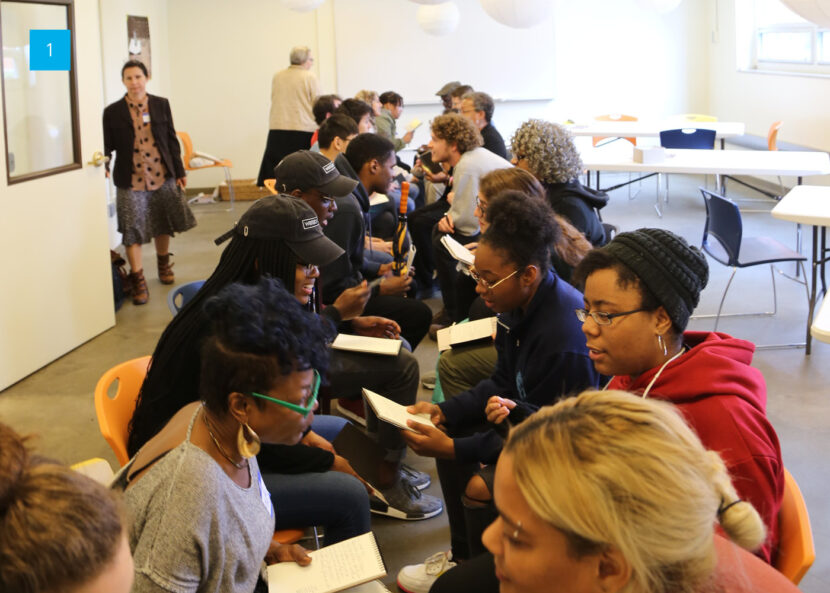
2SC explores potential futures of housing in West Philadelphia through public talks and workshops, such as this HOME Symposium workshop in 2018.
_2
Longtime resident Dianne Wadley and Drexel graduate Ibrahim Kamara are piloting the first homeshare in Wadley’s home in Mantua.
_3
A rendering of Village Square at Haverford (by WRT), a future affordable housing development envisioned by Lomax Real Estate Partners.
_4,5
Some squares from a community quilt being sewn by Sharon Tindall.
_6
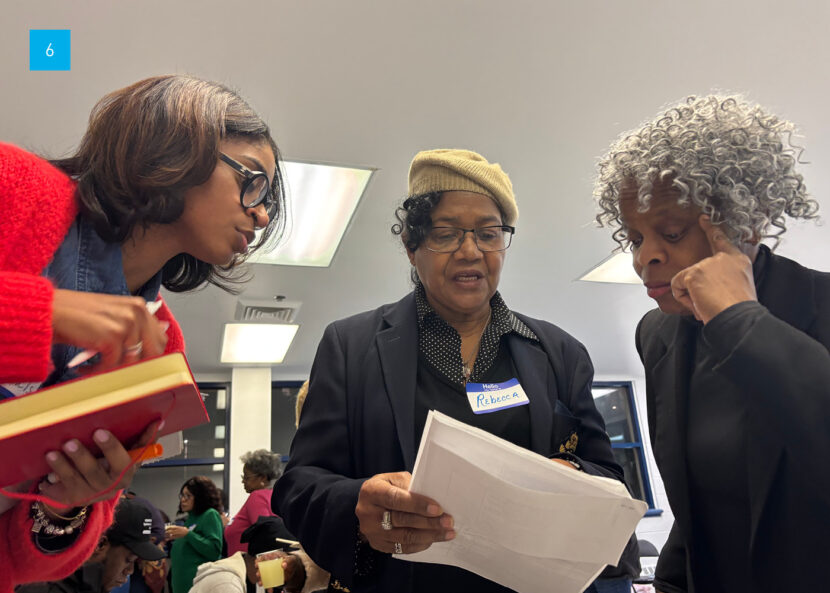
Damaris Dunn, Rebecca Rose Metzger and K. Rose Samuel-Evans prepare for a meeting of the West Philadelphia Community Dialogue Project, which is responsible for the research part of 2SC’s work.
Though the NSF grant was awarded in 2023, this work builds on nearly a decade of community-led arts and placemaking through Drexel’s Writers Room, founded by Rachel Wenrick, executive director of arts and civic innovation. Nearly eight years ago, Writers Room began partnering with the Justice-oriented Youth Education Lab, led by Allen-Handy, along with colleagues and students across the University and with the Mantua Civic Association. They formed Second Story Collective (2SC) to design a model for co-created housing, particularly in Black communities surrounding Drexel.
2SC vets homeshare participants and produces arts programming for them. The homeshare application includes background checks, tenant clearances and landlord licenses for participating homeowners. It’s open to Drexel students and alumni, and to homeowners in West Philadelphia. Arts programming is tailored to residents’ interests: Kamara, for instance, is an aspiring filmmaker and plans to document the experience.
Writers Room has also raised funds for home repairs and implementation from the Pennsylvania Council on the Arts, Department of Community and Economic Development, and the Pennsylvania Housing Finance Agency.
“They’re excited by the potential for scaling this model across our city, our state and our country,” says Wenrick. “City, state, corporate, foundation and federal funders are providing critical support because it’s a co-created community-university program.”
Aging-in-place expert Diana Nicholas, an associate professor in the Antoinette Westphal College of Media Arts & Design, is helping homeowners prepare. She uses her collaboratively developed Mantua Creative Standard for Aging in Place (MCSAP) tool to recommend safety and accessibility improvements. Working with Rebuilding Together Philadelphia, she identifies appropriate modifications — such as enhancing the convivial space of the kitchen and ensuring easy-to-reach food storage.
Through community engagement, creative inquiry and deep neighborhood ties, the initiative is preserving the stories of the people who call West Philadelphia home — and making it more of a home to all.